
Respite care can sound like a formal program—or something you only “qualify for” once everything is already falling apart. In reality, it’s much simpler and much more common: it’s temporary support that gives a family caregiver room to breathe while care stays consistent at home.
If you’re balancing work, family, and caring for a loved one in Tennessee, this guide breaks down what respite care means in plain language (and how families actually use it in real life).
What respite care is:
Short-term, non-medical support that gives family caregivers a break.
What respite care isn’t:
It’s not abandoning your loved one, nor outsourcing care—it’s just a chance for caregivers to recharge.
What respite care is
Respite care is short-term in-home support designed to give a primary caregiver a break… whether that break is two hours, one afternoon a week, or a few days during a busy season.
Families often use respite care for:
- Rest and recovery: catching up on sleep, reducing burnout, resetting emotionally.
- Life logistics: Errands, appointments, work travel, school meetings, church, or just uninterrupted time.
- Consistency for your loved one: A calm routine continues even when you can’t be there.
A helpful way to think about it: respite isn’t “stepping away from care.” It’s adding support so care can continue without you being stretched to the limit.
What respite care isn’t
Respite care is not
- Abandoning your parent or loved one.
- Outsourcing love.
- A ‘last resort’ only for families already in crisis.
It’s also not automatically medical care. Depending on the situation, respite support may focus on:
- companionship and supervision
- help with daily routines (meals, bathing, dressing, mobility support)
- light household assistance tied to comfort and care
If there are urgent medical concerns, involve a clinician. Respite care is typically non-medical support, unless you’ve arranged a medically appropriate service.
Which respite setup fits you? (quick decision guide)
Option A: The Weekly Reset
Best for families who need predictable breathing room every week.
Common setup: 3–6 hours once weekly so you can rest, run errands, or simply have quiet time.
- Schedule 1–2 visits per week, in a consistent block of time
- Commonly used for caregiver recovery or errands
- Flexible to meet shifting schedules
Option B: The Coverage Gap Plan
Best for families who have specific windows when they’re stretched—like work hours, school pick-ups, or evening routines.
Common setup: a few hours during the exact time you feel most “on alert.”
- Targeting specific hours when you’re away, like 9am–2pm for errands or appointments
- Reduces the stress of needing last-minute help
- Flexible scheduling to meet immediate needs
Option C: The After-Discharge Bridge
Best for families whose loved one is recovering from a hospital stay and needs extra support during the first few weeks at home.
Common setup: temporary, short-term help during the first 1–2 weeks after discharge.
- Ensures your loved one isn’t alone while they regain strength
- Bridges the gap until the routine settles
- Allows family members to focus on work or other responsibilities without added stress
Option D: The Out-of-Town Plan
Best for families who need someone to step in temporarily while they’re out of town or otherwise unavailable.
Common setup: short-term coverage for a planned absence (vacation, business trip, family event).
- Provides consistency and safety for your loved one while you’re away
- Offers peace of mind to family members who need to travel
- Ensures the caregiver role isn’t left unfilled
Option E: The High-Stress Season Plan
Best for families who experience a temporary increase in responsibilities—whether due to holidays, illness, or a busy work season.
Common setup: flexible respite help during high-stress or high-need periods.
- Helps caregivers manage heavy loads without burning out
- Keeps routines steady while accommodating additional family or personal needs
- Offers a break when you’re feeling overwhelmed and need space
Not sure what applies? Call us or request care and we’ll guide you.
A gentle reminder: needing respite doesn’t mean you’re failing. It usually means you’ve been carrying a lot (and carrying it well) for a long time.
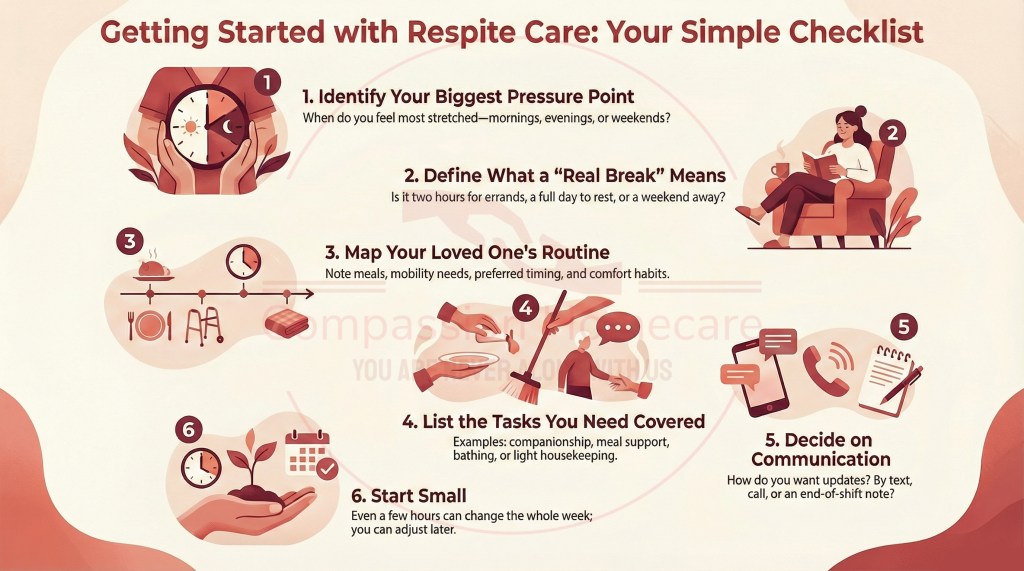
What To Consider before you start
Before you book respite care, it helps to get clear on a few practical points:
- Your biggest pressure point: When do you feel most stretched—mornings, evenings, weekends, workdays?
- What “a real break” means: Two hours? A day? A weekend? (Name it honestly.)
- Your loved one’s routine: meals, preferred timing, mobility needs, comfort habits
- Tasks you want covered: companionship, supervision, meal support, bathing/dressing support, light housekeeping tied to care
- Communication preferences: how you want updates (text, call, end-of-shift note)
- Start small: even a few hours can change the whole week
- Fit matters: the goal is a steady routine that feels comfortable for your loved one—not disruption.
FAQs
Is respite care only for seniors?
No. Families use respite support any time someone needs steady help at home and the primary caregiver needs breathing room.
How many hours should we start with?
If you’re unsure, start small. Even 2–4 hours can reduce stress and improve the week—then you can adjust.
What if my loved one resists having someone new at home?
This is common. Starting with short visits and a calm routine (not “big changes”) often helps the transition feel normal.
Is respite care medical care?
Usually it’s non-medical support, unless you’ve arranged medically appropriate services separately. If there are urgent medical concerns, involve a clinician.
What should I look for in a respite caregiver?
Look for steadiness, respect, reliability, and someone who can keep routines calm and consistent—so your loved one feels safe and comfortable.
Ready to talk through a realistic respite plan?
If you’re in Tennessee and want to explore respite care, we can help you map a plan that fits your schedule and your loved one’s routine.
Serving Chattanooga and nearby areas including Hixson, East Ridge, Ooltewah, Signal Mountain, Ringgold, Middle Valley, Apison, and Graysville.
 Compassion Home Care
Leave a comment