A first home visit doesn’t have to feel awkward.
Inviting someone into your loved one’s home can feel deeply personal. Most families show up with the same quiet question: “What are we supposed to say?”
The good news: a well-run first home visit is designed to feel calm, respectful, and low-pressure. Not clinical, not rushed, and not intrusive.
If you’re in Chattanooga or nearby (Hixson, East Ridge, Ooltewah, Signal Mountain, Ringgold, Middle Valley, Apison, Graysville), here’s what a first visit typically looks like, so you can relax and feel prepared.
What typically happens during a first home visit?
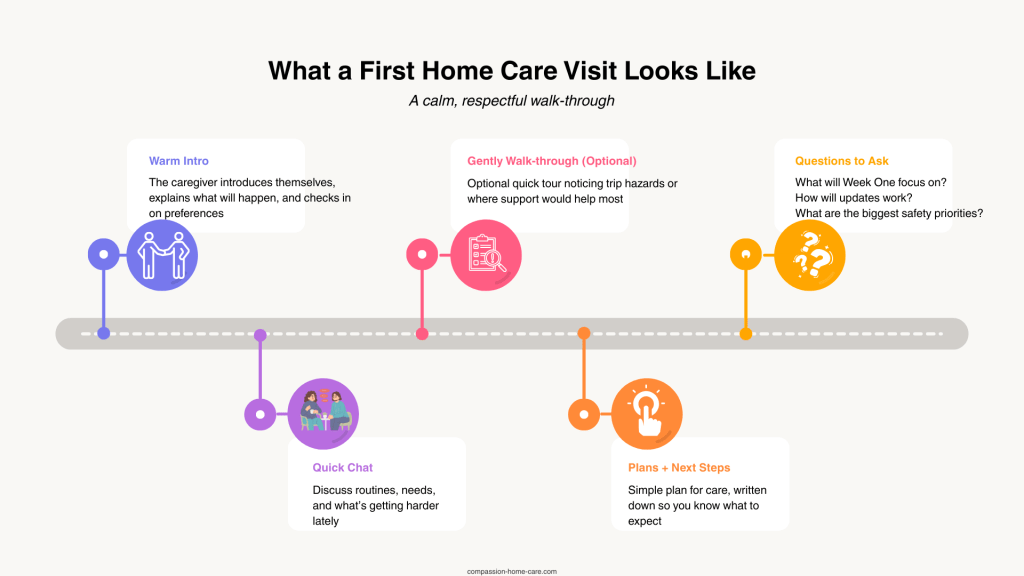
- A warm introduction (and permission)
The caregiver introduces themselves, explains what will happen, and checks in on preferences—like what name your loved one wants to be called.
Research on home nursing care suggests families value caregivers who are kind, reassuring, and attentive, not rushed or overly “clinical.” - A simple conversation first (not a checklist interrogation)
Most of the visit is just talking about daily routines and what’s getting harder lately. Person-centered communication in home care focuses on the individual’s needs and emotional comfort, not just tasks. - A quick, practical walk-through (not an inspection)
If you’re comfortable, there may be a brief look at common “pinch points”:
-Steps and entryways
-Lighting (especially hallways and bathrooms)
-Bathroom setup
-Trip hazards (rugs, cords, clutter)
-Where support would help most
The goal isn’t to judge the home. It’s to reduce avoidable stress and prevent problems before they become emergencies. - Clear options (starting small is normal)
Many families begin with a few hours for:
companionship
routine support
light help around the home
respite for a family caregiver
Planning ahead gives you time to choose support that fits rather than reacting in a crisis. - Before the visit ends, you should leave with clarity:
A simple schedule (days/times)
Priorities for the first week
How updates and communication will work
Who to contact if anything changes
Clarity lowers stress—and that’s one of the biggest wins of a good first visit.
Home care can be a strong support, but urgent symptoms deserve urgent medical attention. If there’s immediate danger—like a serious fall, sudden confusion, severe weakness, chest pain, trouble breathing, or signs of stroke—seek emergency care right away.
“Not awkward” checklist (what you can do to make it feel natural)
You don’t need a script. But these small choices help:
- Choose a comfortable place to sit (living room/kitchen table is fine)
- Let your loved one answer first whenever possible
- Share one or two “daily life” details (sleep, meals, mood, mobility)
- Mention what helps them feel respected (privacy, quiet tone, slow pacing)
- It’s okay to say: “We’re new to this and a bit nervous.”
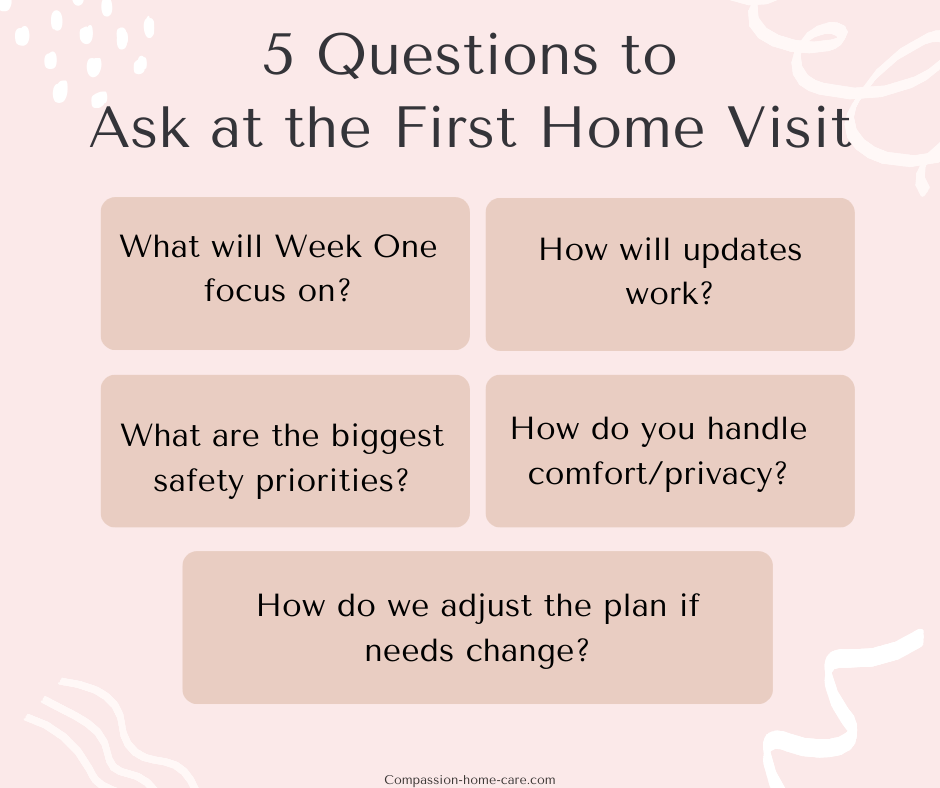
Questions you can ask during the first visit
Pick a few—no need to ask everything.
About fit and comfort
- “How do you help someone feel at ease when they’re shy or private?”
- “What do you do if my loved one says ‘no’ to help at first?”
- “How do you build trust without forcing anything?”
About care and routines
- “What would you focus on in week one?”
- “What does a typical visit look like for companionship vs personal care?”
- “How do you document changes we should know about?”
About safety and communication
- “What are common fall risks you watch for right away?”
- “How do we communicate updates—text, phone, notes?”
- “If something changes suddenly, what happens next?”
Need a calm, human-first visit?
If you’d like a first home visit that feels unhurried and respectful, we can help.
Frequently Asked Questions
How long does a first home visit take?
Often 30-60 minutes, depending on what you need and how many questions you have.
Do we have to commit immediately?
No. A good first visit should give you clarity, not pressure.
What if my loved one doesn’t want help?
That’s common. The goal is to start gently, build trust, and respect autonomy.
Is the walk-through required?
No. It should only happen with your permission and comfort.
What would make a first home visit ‘not awkward’ for your family—privacy, pacing, or knowing what questions to ask?
 Compassion Home Care
Leave a comment