In this article:
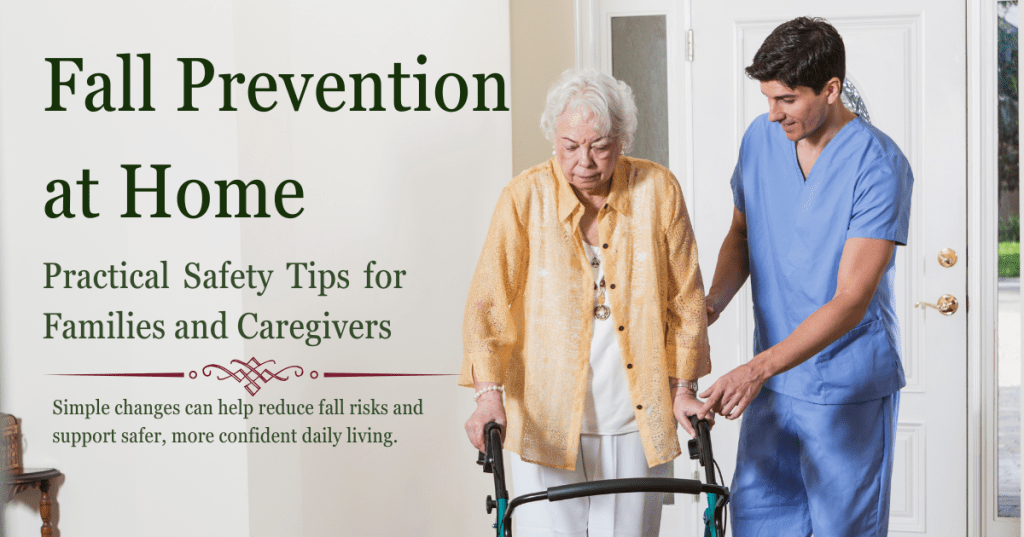
Learn the common fall risks families often overlook, simple room-by-room safety tips, and how to support a loved one’s confidence and safety at home.
Falls can happen quickly, but the risks often build up slowly.
A loose rug. A dark hallway. A slippery bathroom floor. A pair of shoes without enough grip. A loved one who now needs a little more time getting up from a chair than they used to.
For many older adults, staying safe at home is not about making one big change. It is often about noticing the small everyday risks that can make walking, bathing, dressing, or moving around the house more difficult.
The good news is that many fall risks can be reduced with simple, thoughtful changes. Families do not need to wait until after a fall to start paying attention. A safer home can help an older loved one feel more confident, more supported, and more comfortable with their daily routine.
Why Fall Prevention Matters at Home
For older adults, a fall can affect more than physical safety. It can also affect confidence, independence, and peace of mind.
After a fall, some people become afraid to move around as freely as they used to. They may avoid walking, bathing alone, going outside, or using certain areas of the home. Over time, this can lead to more weakness, less activity, and greater dependence on others.
That is why fall prevention is not only about avoiding injury. It is also about helping your loved one continue daily life with as much safety, dignity, and confidence as possible.
Signs to pay attention to:
Families are often the first to notice small changes in movement, confidence, or daily routines. These signs are worth paying attention to.
Movement & Balance Changes
- Holding onto furniture while walking
- Struggling to get in or out of a chair
- Avoiding stairs or certain rooms
- Moving more slowly than usual
Daily Routine Concerns
- Complaining about dizziness or weakness
- Having difficulty with bathing, dressing, or toileting
- Wearing shoes or slippers that do not offer enough support
These signs do not always mean something serious is wrong, but they are worth paying attention to.
Common Fall Risks Families May Overlook
Many fall risks are easy to miss because they feel normal in the home. A rug may have been in the same place for years. A hallway may have always been dim. A bathroom may look clean and familiar.
But as a loved one’s mobility, strength, balance, or vision changes, familiar spaces can become harder to navigate.
Some common fall risks include:
- Loose rugs or mats
- Clutter on the floor
- Electrical cords across walkways
- Poor lighting in hallways, bedrooms, bathrooms, or stairs
- Wet or slippery floors
- Low chairs that are difficult to rise from
- Unstable furniture used for support
- Shoes or slippers with poor grip
- Lack of grab bars in bathrooms
- Items stored too high or too low
- Pets moving around the feet
- Rushing to the bathroom, especially at night
A good first step is to walk through the home slowly and look at each space from your loved one’s point of view. Ask: “Would this area feel safe if someone was tired, using a walking aid, waking up at night, or moving more slowly than usual?”
Room-by-Room Home Safety Tips
Each room in the home can carry different fall risks. A simple room-by-room check can help families notice small issues before they become bigger safety concerns.
Living Room
Keep walkways clear and make sure the main seating area is easy to move through.
- Remove loose rugs or secure them properly
- Keep cords away from walking paths
- Choose stable chairs that are easy to rise from
- Avoid low tables or clutter near the feet
Bedroom
Falls can happen when someone gets up quickly, especially at night or when the room is dark.
- Keep a lamp, phone, and glasses close to the bed
- Clear the path from the bed to the bathroom
- Use night lights in bedrooms and hallways
- Keep walking aids within easy reach
Bathroom
Bathrooms are one of the most important areas to review because floors can become wet and slippery.
- Use non-slip mats or surfaces
- Keep toiletries within easy reach
- Consider grab bars near the toilet and shower
- Avoid using towel racks for body support
Kitchen
The kitchen should be arranged so your loved one does not need to climb, stretch, or rush.
- Keep frequently used items within easy reach
- Clean spills as soon as possible
- Avoid loose mats on the floor
- Keep bags, boxes, and clutter out of walkways
Stairs and Hallways
Stairs and hallways should feel clear, bright, and easy to move through at any time of day.
- Make sure handrails are secure and easy to grip
- Keep stairs and hallways free from shoes, bags, and laundry
- Use good lighting at the top and bottom of the stairs
- Avoid carrying too many items while using the stairs
A Small Detail That Makes a Big Difference: Footwear
Shoes and slippers can make a bigger difference than many families realize. Footwear that slips off easily, has smooth soles, or does not support the foot can increase the risk of falling, especially on tiled, wooden, or wet floors.
- Choose shoes or slippers that fit well and stay securely on the foot
- Avoid smooth or slippery soles
- Avoid walking in socks on smooth floors, especially in bathrooms or kitchens
Do Not Ignore Changes in Balance, Strength, or Confidence
Home safety changes can help, but they are only one part of fall prevention. If your loved one seems weaker, more unsteady, dizzy, or less confident than before, it is important to pay attention.
Sometimes fall risk can be connected to medication side effects, changes in vision, pain, weakness, dehydration, low blood pressure, or other health concerns. A professional review can help identify what may be contributing to the problem.
If your loved one seems weaker, dizzier, or more afraid of falling than before, it is worth discussing this with a doctor, physiotherapist, or another qualified healthcare professional.
How Home Care Can Support Safer Daily Routines
Home care does not replace medical care, but it can provide practical support with everyday routines that may carry fall risks. For many families, having someone present, attentive, and familiar with the daily routine can make home feel safer and less stressful.
Depending on your loved one’s needs, home care support may help with:
- Safe movement around the home
- Bathing and personal care support
- Dressing and grooming
- Meal preparation
- Light housekeeping to reduce clutter
- Medication reminders, where appropriate
- Toileting routines
- Companionship and reassurance
For many families, the biggest benefit is peace of mind knowing their loved one has practical support with daily routines at home.
Quick Home Safety Checklist
Use this simple checklist to walk through the home and notice areas that may need small safety adjustments.
- Are walkways clear and easy to move through?
- Are rugs secure, or should they be removed?
- Is there enough lighting at night?
- Are bathroom floors protected with non-slip surfaces?
- Are grab bars installed where extra support is needed?
- Are frequently used items within easy reach?
- Is footwear supportive and secure?
- Does your loved one hold onto furniture while walking?
- Has your loved one fallen, stumbled, or become more afraid of falling?
- Is bathing, dressing, or toileting becoming more difficult?
If several of these questions raise concern, it may be time to make changes at home and consider whether additional support would help.
Final Thoughts
Fall prevention starts with paying attention. Small changes around the home can make daily routines easier, calmer, and safer for an older loved one.
You do not need to wait for a serious fall before making the home safer. Start with the areas your loved one uses most often, then consider whether their daily routine would feel safer with extra support.
If you are concerned about a loved one’s safety at home, Compassion Home Care can help support safer daily routines with practical, compassionate in-home care.
You can also explore more family care guidance in our Resources section
Educational Note
This article is for general educational purposes only and should not replace medical advice. If your loved one has fallen, feels dizzy, has new weakness, or is becoming less steady, please speak with a qualified healthcare professional.
 Compassion Home Care
Leave a comment